
From a Swedish quarry to the mines of Inner Mongolia, discover the remarkable history and hidden power of the rare earth elements that make modern technology possible.
You’ll find them at the bottom of the periodic table, below zinc, silver, tin, gold, and mercury; an awkward cluster of elements often shown as an afterthought, tucked away to keep the chart tidy. Here, beneath the familiar metals of coinage and craft, lie the lanthanides and the rare earths. They occupy a peculiar no-man’s-land between chemistry and alchemy, too alike to separate easily, too essential to ignore.
This hidden row, stretched along the bottom like a geological seam, is where the table grows strange. Above it sit the lustrous heavyweights: platinum, gold, and tungsten, elements of wealth and war. Below them, the rare earths hum with subtler powers: magnetism, fluorescence, catalytic precision.
These obscure elements—neodymium, yttrium, lanthanum, cerium, and their fifteen shimmering cousins—are the quiet enablers of our age; the foundation minerals of our digital age. Without them, there would be no smartphones, no wind turbines, no satellites, no electric vehicles, no lasers. Hidden in plain sight, they are the elements behind everything that hums, glows, and connects.

The Puzzle of the Earths
The story of the rare earths doesn’t begin in a laboratory, but in a quarry. In 1787, a young Swedish army lieutenant, Carl Axel Arrhenius, was exploring the island of Ytterby, near Stockholm, when he stumbled upon a heavy black rock. He sent it to a chemist friend, who identified within it a new oxide, or “earth.”
From that single fragment of stone, an entire scientific saga unfolded. Over the next hundred years, chemists teased out a succession of new elements from the same source—yttrium, terbium, erbium, and ytterbium—all named for that quiet village on the Baltic coast.
Back then, “rare earths” did not mean elements that were scarce, but rather those difficult to separate. Their rarity lay in their chemistry. So closely packed were their atoms that each behaved almost like its neighbour, their identities blurred, their secrets half-hidden.
It was, in its way, a scientific adventure story—The Riddle of the Sands rewritten in powders and light—with Europe’s chemists as the code-breakers, their quarry not treasure or territory, but the hidden order of the elements themselves.

The Long Unravelling
Throughout the 19th century, a small brotherhood of European chemists pursued this riddle. Johan Gadolin first isolated yttrium in 1794. Carl Gustaf Mosander followed with lanthanum, erbium, and terbium in the 1830s. Yet the puzzle deepened with each discovery; for every new element, another mixture seemed to lurk inside.
Only with the arrival of spectroscopy—the study of light emitted by heated elements—did clarity begin to dawn. Each rare earth revealed its own distinctive set of spectral lines, thin as threads of colour across the dark. For the first time, chemists could see what had long been concealed.
But even then, the separation of the elements was a painstaking labour, measured not in weeks or months but in years. For most of the century, they remained little more than curiosities: fascinating, beautiful, and maddeningly elusive. Their true importance would not be realised until the world learned how to split atoms and build machines that spoke to the sky.

Hidden Strengths
The rare earths share a subtle quirk of atomic structure: their outer electrons are shielded by inner shells, allowing strange and powerful effects. Magnetism, fluorescence, catalytic precision: each arises from this delicate layering.
Neodymium forms the heart of the strongest permanent magnets, used in turbines and electric motors. Europium and terbium bring colour and light to screens and LEDs. Lanthanum refines petroleum; cerium polishes glass and camera lenses. Gadolinium sharpens MRI images deep within the human body.
They are, as one engineer called them, “the vitamins of modern industry”, needed only in trace amounts, yet vital to the machinery of contemporary life.

From Ytterby to Inner Mongolia
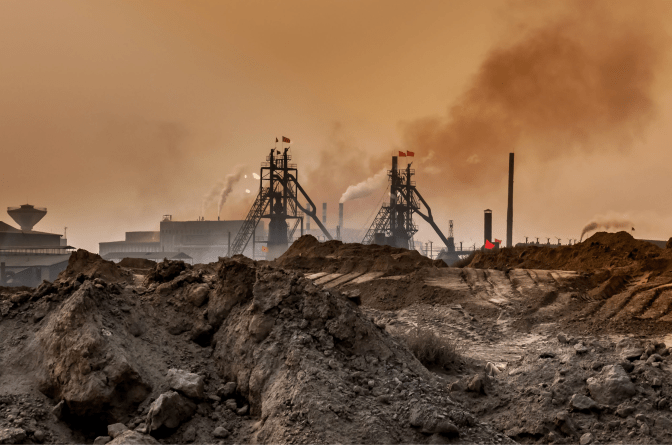
For much of the 20th century, rare earths remained the province of scientists and laboratories. Then, in the mid-century dawn of industrial China, a new chapter began. In the northern grasslands of Inner Mongolia, miners uncovered vast seams of ore at Baiyun Obo, near the city of Baotou.
What began as an iron mine soon revealed itself as the world’s greatest repository of rare-earth elements, a geological treasure chest buried beneath the steppe. By the late 20th century, China’s mastery of extraction and refinement had significantly transformed the global technology landscape.
From a Swedish island to a Mongolian plain, the arc of the rare earths mirrors the evolution of science itself; from curiosity to necessity, from mystery to power. Yet every revolution leaves its shadow. Around Baotou lie tailings ponds of toxic sludge, reminders that progress always comes at a price.
Alchemists of the Modern World
The rare earths rarely make headlines. They are the background notes of civilisation: invisible, unglamorous, indispensable. And yet, within them lies the true music of modernity: the hum of turbines, the glow of glass, the pulse of data.
The irony is exquisite. Elements that eluded recognition for a century now shape the destiny of nations. The next time you swipe a screen, start a car, or watch a turbine turn against the sky, remember that the future began in the most unlikely of places: in a Swedish quarry and beneath the bottom row of the periodic table.


 dragonferncopy.com