
Discover why copper pipe fittings remain the gold standard in HVAC and plumbing, offering unmatched durability, efficiency, and long-term value.
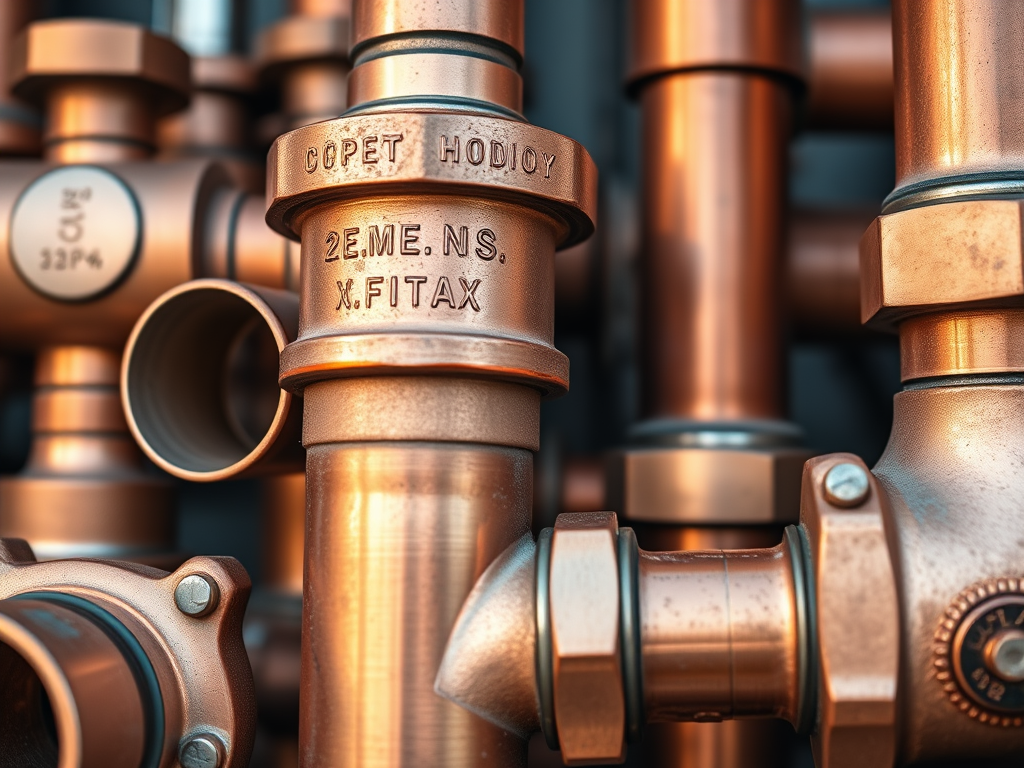
In an era of constant technological innovation, few components have stood the test of time like copper pipe fittings. From residential HVAC systems to complex commercial refrigeration networks, copper remains the go-to material for professionals across the globe. Its unmatched thermal conductivity, corrosion resistance, and longevity make it an indispensable ally in ensuring system performance, safety, and efficiency.
But why do copper fittings—the bends, tees, reducers, and couplings—matter so much in the broader picture of system design? And how is innovation in jointing methods transforming their application?
Let’s dive deep into the enduring value of copper fittings and explore why, despite the rise of plastics and composite materials, copper continues to be the heart of efficient fluid and gas distribution systems.
1. Why Copper? A Material Built for Precision and Performance
Copper’s continued dominance isn’t just a matter of tradition—it’s a result of science.
- High thermal conductivity: Perfect for transferring heat in air conditioning and refrigeration systems.
- Antimicrobial properties: Important in healthcare, food processing, and cleanroom environments.
- Corrosion resistance: Particularly when used with high-quality fittings and correct brazing or press fitting techniques.
- Workability: Malleable yet strong, copper can be shaped precisely without compromising integrity.
In fittings, these advantages multiply. A single poorly designed or incorrectly installed elbow or tee can lead to vibration, friction loss, or even failure. Copper ensures consistency and reliability.
2. Understanding the Types of Copper Fittings
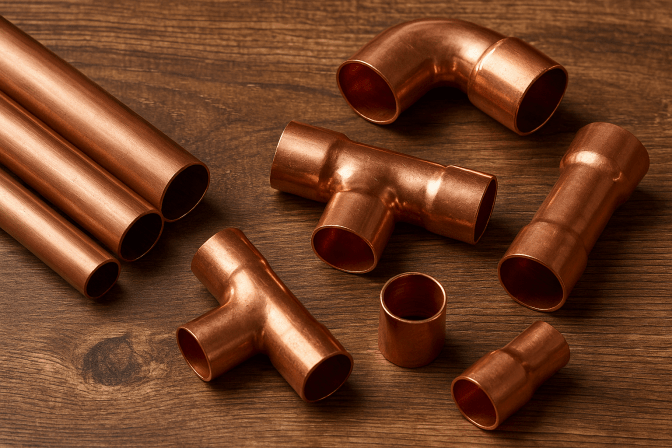
Whether in HVAC, plumbing, or refrigeration, copper fittings fall into several broad categories. Each has a distinct role:
Elbows (45° and 90°)
Used to change the direction of flow. A smooth, correctly-sized copper elbow ensures minimal pressure drop and maximum energy efficiency.
Tees and Crosses
For branch connections. Ideal in manifold systems or when multiple units (like fan coils) are served by a central line.
Reducers and Couplings
For transitions between different pipe sizes or joining two similar pipes. Precision here is critical—any mismatch can cause leaks or reduce system flow.
Caps and Plugs
Used to terminate a line during system isolation or for future extensions.
All of these are available in solder, brazed, or press-fit configurations, depending on system requirements and installer preference.

3. The Evolution of Jointing: From Fire to Force
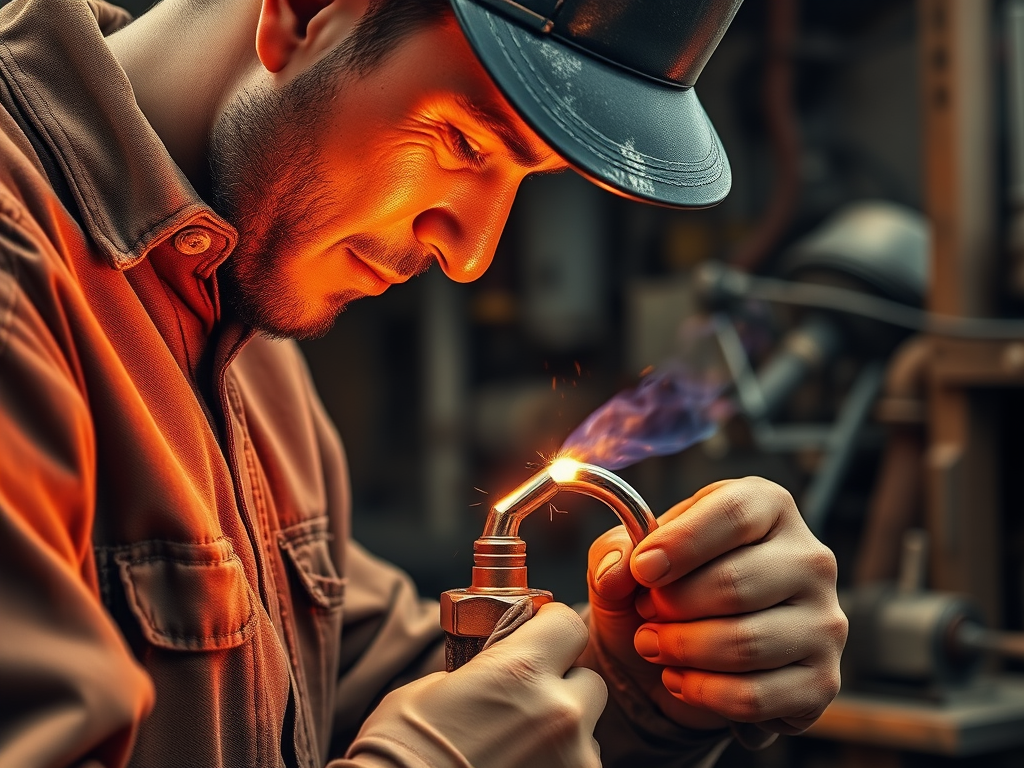
Traditionally, copper fittings were joined using soldering or brazing, both requiring open flame and significant skill. While still widely used (especially in large-scale or high-pressure systems), new technologies are rapidly gaining ground.
Press Fitting Technology
Press fitting uses mechanical force and rubber sealing elements (often EPDM) to create a watertight and gas-tight connection. Key advantages include:
- Speed: Up to 60% faster than brazing or soldering.
- Safety: No flames or fumes, reducing fire hazards and the need for hot work permits.
- Consistency: Factory-made fittings ensure reliable, repeatable connections every time.
Leading manufacturers now offer press fittings specifically for refrigeration and HVAC applications, tested under extreme temperature and pressure conditions.

4. Copper vs Alternatives: Why It Still Leads
With the rise of PEX, CPVC, and multi-layer composite piping, one might ask: is copper outdated?
Not at all.
Temperature and Pressure Tolerance
Copper performs reliably at both low and high temperatures, from chilled water lines to superheated refrigerants.
Durability
Plastic may degrade under UV exposure or fail under mechanical stress. Copper’s resilience in the face of vibration, movement, and pressure surges makes it a trusted choice.
System Longevity
Copper systems, when properly installed, routinely last 50 years or more. This lowers lifecycle costs despite higher initial material prices.
Fire Resistance
Crucial in commercial buildings, copper does not burn or emit toxic gases.
While plastic piping has its place in some residential and low-temperature applications, copper fittings remain the gold standard in demanding environments.
5. The Role of Fittings in System Efficiency
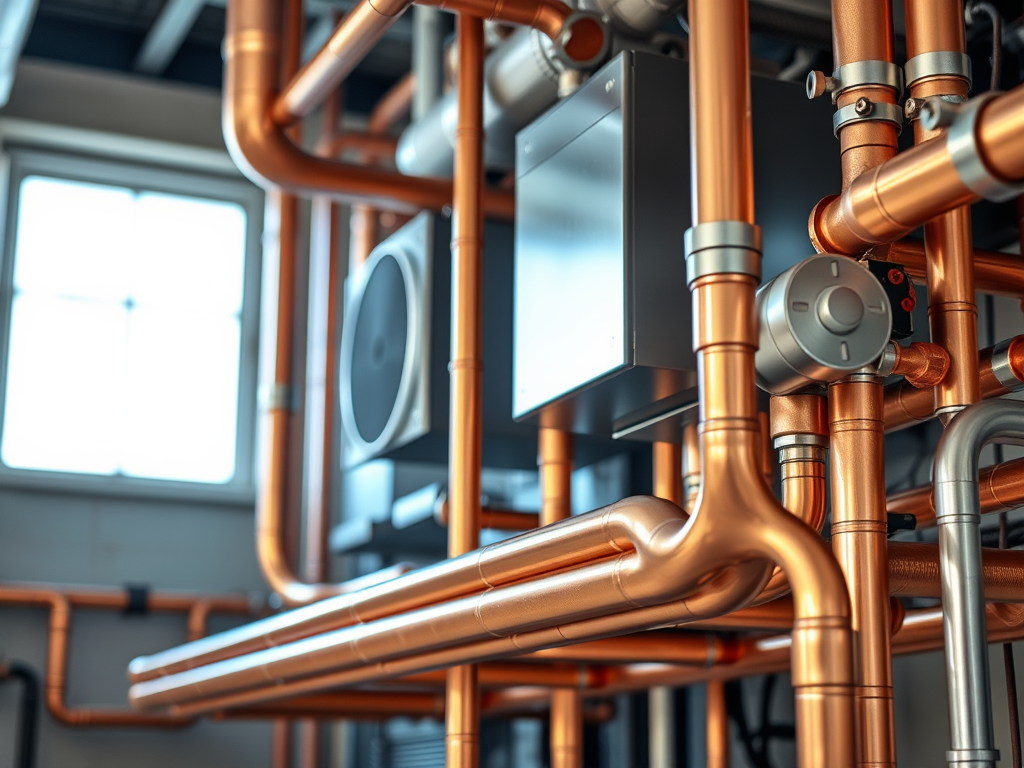
In HVAC systems, fittings don’t just connect pipes—they shape performance.
Minimising Pressure Drop
Every bend or branch introduces resistance. Quality copper fittings, engineered with smooth internal surfaces and precise geometry, reduce friction losses.
Controlling Flow Direction
Turbulence can lead to noise, vibration, and inefficiency. The right fitting ensures laminar flow and optimal system balance.
Thermal Expansion Handling
In long pipe runs, fittings play a key role in accommodating expansion and contraction, protecting joints from fatigue or fracture.
Proper fitting layout, spacing, and jointing methods directly impact the operational cost and lifespan of the entire system.
6. Smart Installation: Best Practices with Copper Fittings
To get the best out of copper fittings, precision installation is essential. Here are a few proven techniques:
- Deburr and clean all pipe ends before fitting. This prevents contamination and ensures a proper seal.
- Use the correct flux and filler metal for solder or brazed joints, based on application type (potable water, gas, refrigerant, etc.).
- Avoid overheating during brazing. Overheating can weaken the copper and damage nearby components.
- Follow press-tool calibration protocols. Regular tool checks ensure each joint meets system pressure ratings.
- Support the piping adequately to avoid strain on fittings due to vibration or movement.
A well-trained installer can make the difference between a system that lasts five years and one that runs perfectly for decades.
7. Sustainability and Recycling: The Green Case for Copper
In today’s world, sustainability is no longer optional. Fortunately, copper fits beautifully into the green building narrative.
- 100% recyclable without loss of quality.
- Low embodied energy when compared with plastic alternatives over the full lifecycle.
- Valuable as scrap: Unlike many plastic systems, end-of-life copper components can be dismantled and recycled.
Many LEED and green-certified buildings specify copper piping and fittings for their environmental and health credentials.
8. What’s Next? Smart Copper Systems and Precision Manufacturing
Technology is enhancing copper fitting design in exciting ways.
Computer-Aided Flow Simulation
Used in designing advanced fittings that reduce pressure loss and turbulence.
Factory Pre-Fabrication
Growing trend towards off-site prefabricated copper headers, branch assemblies, and riser stacks—saving time and reducing installation risk.
Smart Monitoring Integration
Copper systems are now being fitted with sensors to monitor temperature, pressure, and flow in real-time, transforming traditional plumbing into intelligent infrastructure.
At the heart of it all? The humble copper fitting—reborn for the 21st century.
Conclusion: Precision, Performance, and Proven Reliability
Copper pipe fittings may seem small in the grand scheme of HVAC and refrigeration systems, but their role is anything but minor. From ensuring leak-free performance under extreme conditions to enabling flexible, intelligent designs, they remain the backbone of countless engineered systems across the globe.
As the industry pushes towards faster installs, smarter buildings, and sustainable materials, copper fittings continue to evolve—quietly doing their job with quiet confidence and unparalleled reliability.
So the next time you’re admiring a perfectly climate-controlled space or an efficient refrigeration plant, spare a thought for the copper fittings—hidden behind the walls, but never out of action.

 dragonferncopy.com